
The hinge of this book is one sentence, spoken on 17 November 1971 in the cramped lobby of the Hôtel du Danube in Paris, and quoted by its author for the next four decades: I will neither help nor hinder you. My friends and family will assist you and my enemies will find you soon enough.
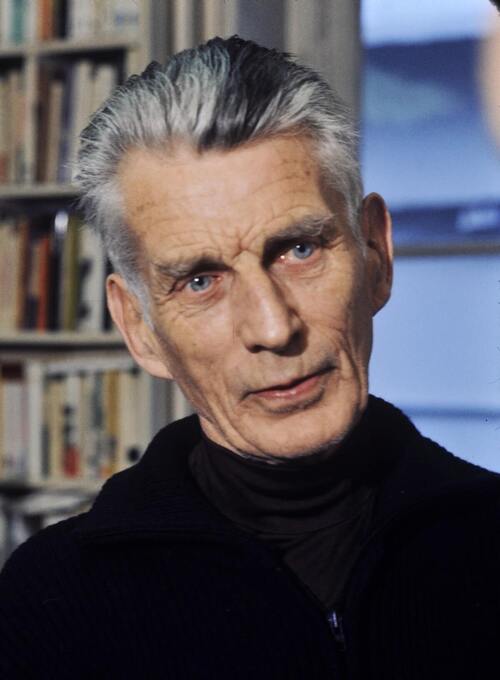
Samuel Beckett said it to Deirdre Bair, then a graduate student, when she asked to write his life. Parisian Lives: Samuel Beckett, Simone de Beauvoir, and Me — A Memoir, published in 2019, is her account of what happened next: fifteen years of work in Paris across two biographies, and what those years cost.
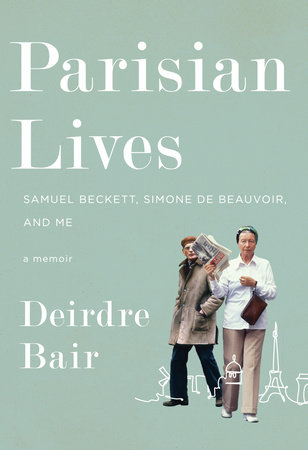
What the book actually is
It is not a third biography. It is a memoir about the making of the first two — Samuel Beckett: A Biography (1978) and Simone de Beauvoir: A Biography (1990) — and it belongs to a small genre: the biographer turning the apparatus on herself.
That means the book spends its time on things most finished biographies hide. How you get an interview. What you do when a subject contradicts a document. Who pays for the plane tickets. What it is like to sit across from a man who will not help you and will not stop you, and to know that everything he does not say is also evidence.
If you come to it expecting new revelations about Beckett’s work, you will be disappointed, and that is the book’s design rather than its failure. The subject here is research.
The two halves are not symmetrical
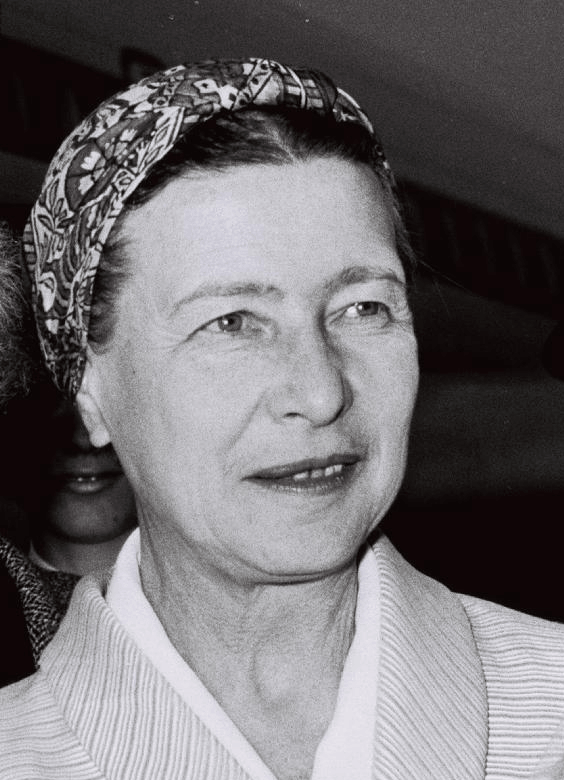
Beckett kept his distance and kept his word: he neither helped nor hindered. Beauvoir did the opposite. She gave Bair extended access and a great deal of time, and used both — steering, correcting, and shaping the account of her own life while it was being written.
Bair is candid that this was a harder problem than Beckett’s silence. A subject who refuses to cooperate leaves you to find the documents. A subject who cooperates enthusiastically leaves you holding a version, and the work becomes deciding how much of it to believe.
The part that made reviewers uncomfortable
A substantial portion of Parisian Lives is a record of how Bair was treated as a young woman writing about famous men in the 1970s and 1980s. She names the assumption that she must have slept with Beckett to get access. She names the senior academics who told her the subject was not hers.
Reviewers split on this. Some read it as necessary and overdue testimony about how the profession worked. Others found the settling of scores tonally at odds with the restraint of her biographies. Both readings are defensible, and a reader deciding whether to buy the book should know the material is there.
Reception
The book was a finalist for the 2020 Pulitzer Prize for Biography. It was Bair’s last; she died in April 2020, shortly before the prize was announced.
It is also, in practice, the best available introduction to how she worked. Anyone reading her Beckett, Beauvoir, Nin or Jung biographies closely will find that Parisian Lives explains the method those books use but never describe.
Editions
- Hardcover, Nan A. Talese, 2019 — ISBN 978-0-385-54245-6 (this page)
- Paperback, Knopf Doubleday, 2020 — ISBN 978-0-525-43290-6
- UK edition, Atlantic Books
This site is an independent reader’s project about Deirdre Bair’s books and the lives she wrote about. It is not affiliated with Deirdre Bair, her family, her estate, or her publishers.